
In my last Cooking 101 post on Why Use Kosher Salt?, I asked for suggestions on what topics you would like me to cover in future Cooking 101 posts. I received lots of great ideas, one of which was to cover the different types of yeast.

So, for this Cooking 101, I'd like to explain the differences between the different types of yeasts -- what they are made of, what they have in common and how to use them.
Yeast can be a tricky thing. Sometimes, even though I usually think I understand yeast, I'll find a recipe that calls for a certain type of yeast that I either don't have on hand or don't know about. Hopefully, you will find this explanation useful and can look to it in the future as a reference.
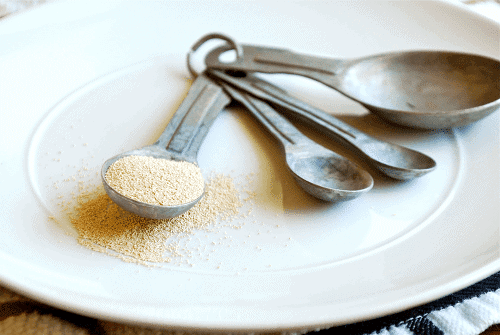
What is Yeast?
Yeast is actually a member of the fungus family and is a living organism in the air all around us. Baker's yeast, like baking powder and baking soda, is used to leaven baked goods (such as breads and cakes). Baking powder and baking soda react chemically to produce the carbon dioxide that makes the baked goods rise. Yeast, however, does not cause a chemical reaction. Instead, the carbon dioxide it produces is the result of the yeast literally feeding on the dough.
Different Types of Yeast
Yeast comes in two forms: (1) Fresh Yeast (also called Compressed Cakes) and (2) Dry Yeast (also called Dehydrated Granules).
Fresh yeast is soft and moist and is mainly used by professionals. It must be refrigerated or frozen, as it is highly perishable. Fresh yeast needs to be proofed before using.
Dry yeast is fresh yeast that has been pressed and dried until the moisture content makes the yeast dormant (until mixed with warm water). Dry yeast has a much longer shelf life than fresh yeast and does not need to be refrigerated unless opened. Once opened, dry yeast needs to be stored in the refrigerator away from moisture, heat, and light because it deteriorates rapidly when exposed to air.
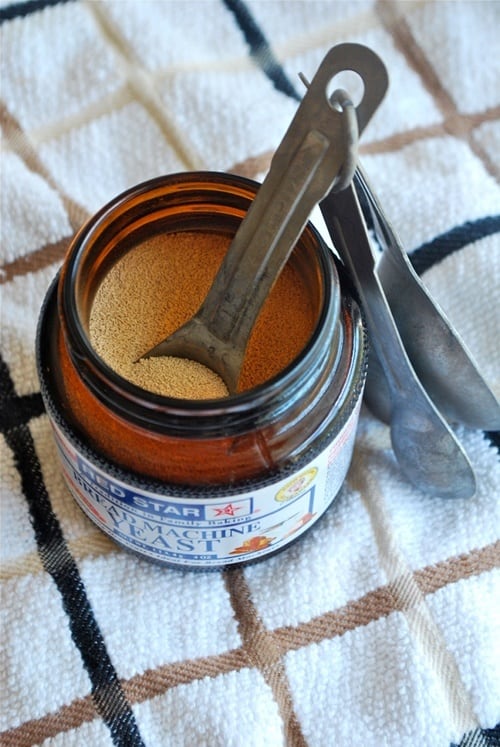
Types of Dry Yeast
There are two types of dry yeast: (Regular) Active Dry Yeast and Rapid-Rise Yeast. Though there are some minor differences in shape and nutrients, Rapid-Rise Yeast is (pretty much) the same as Instant Yeast and Bread Machine Yeast. This is where understanding yeast can definitely get confusing.
These two types of dry yeast can be used interchangeably, with some limitations. Though Bread Machine Yeast is faster-rising and is specially formulated for bread machines, as its texture is finely granulated to hydrate easily when combined with flour, Active Dry Yeast may also be used in bread machines (though it but may not yield completely equal results). The advantage of the Rapid-Rise Yeast is the rising time is half that of the Active Dry and it only needs one rising. Though this is an advantage, you do sacrifice some flavor and texture by speeding up the rising process as the yeast does not have time to develop its own flavor. Also, Rapid-Rise Yeast is a little more potent than Active Dry Yeast and can be mixed in with your dry ingredients directly.
How to Use Yeast
Some recipes call for dissolving the yeast first in a warm liquid and then adding this active yeast mixture to the flour while others call for the yeast first being added to the flour, followed by the liquid. Why is this? The dissolving of the yeast first in a warm liquid is done to make sure the yeast is fresh and active. Since yeast is a living organism, it is possible the organisms have perished which would result in no leavening. Though this step probably doesn't really need to be done any longer because of how reliable dry yeast is today, some bakers still feel it's a good idea to test the yeast to make sure it is still active before adding it to the flour. Active Dry Yeast works just as well as Instant Yeast, but its instructions require you to activate it in a little bit of warm water before being added to the rest of the ingredients.
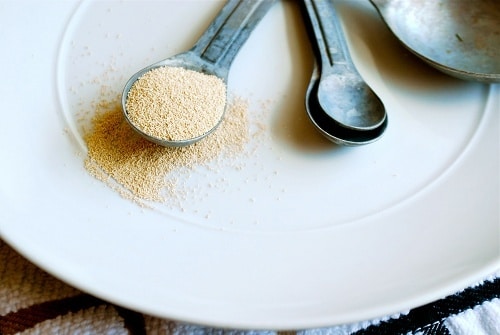
General Guide to Purchasing Yeast
Granted, purchasing yeast can be a confusing process due to different manufacturers not using the same names for their products or using the same names for different types of yeast. That being said, here's a general guide to purchasing yeast using popular labeling and product instructions:
- Cake (Moist) - traditional live yeast; needs to be dissolved in water
- Active Dry - traditional dry yeast; needs to be dissolved usually with sugar
- Instant - contains small amount of yeast enhancer; does not need to be dissolved
- Bread Machine - exactly the same as Instant but in a different package
- Rapid-Rise - larger amount of yeast enhancers and other packaging changes to the granules; does not have to be dissolved
Can I Substitute Active Dry Yeast for Rapid-Rise Yeast?
Yes! If you are substituting Active Dry Yeast for Rapid-Rise Yeast in a recipe, just read the instructions on the package to figure out how to activate the yeast before adding it to the recipe and reduce the amount of water (or other liquid) you add later in the recipe by the amount you use to proof the yeast. If you are substituting Rapid-Rise Yeast for Active Dry Yeast, just reduce the amount of yeast you use in your recipe by approximately 20 percent and increase the amount of water you add to the dry ingredients by the amount that you would have used to proof the Active Dry Yeast so you end up with the same total amount of liquid in the recipe.
I hope that helps clear up the differences. Please let me know if you have any more questions regarding yeast or have future Cooking 101 topic suggestions.

hello
quite good facts but not enough on the page could add ,more intresting facts about touching yeast i hate you
CJ
"i hate you" ??? what a horrible thing to say. Post nothing at all if it's something negative and personal about the person rather than the recipe.
Apimom
Hate because of posts about baking and yeast? Whatbare tou going to do if it is a bigger issue?
Batel
I would like to use fermented water to create my own live yeast. Any thoughts are most appreciated.
are you ok
yes that would be awesome
Dolores Dawson
my recipe calls for granulated yeast.Which of the above is granulated /
Boni
I want to make nut rolls and I have an old recipe given to my mom which is very good; however, in reviewing other recipes from a church recipe book noticed that some recipes say to let the dough rise and some do not? So can you please explain to me the difference in letting dough rise and/or not. Also what would be the difference in flavor or texture of the dough?
Thank you very much,
Boni
Carol
This yeast situation is incredibly irritating!!! Why do I have to buy two different yeasts for different recipes? I appreciate that you gave instructions here on how to substitute, but if I am in the middle of a recipe, I hate to stop and have to go to the internet to figure out what to do!! Is rapid rise yeast and instant yeast the same thing?
Sandy lilli
What kind of yeast do bakers use when they make the bread and just freeze the dough? Can I possibly make it at home?
joan
USA yeast is not made the same way as it used to be in the 1980's and earlier and so the bread I make today is not half as good as the bread I used to make in the 1970's and 1980s. Contacting yeast companies you will be told that it tastes different because they process it differently than they used to. Do you know where I can buy old fashioned dry yeast? I am afraid it is no longer available - do you know? Let me know if you know if it is available anywhere.
Fi
Hi there. What's the difference between bread yeast and yoghurt yeast? Can you use bread yeast to make yoghurt?
Chain
Thank you
Jane Edwards
Enjoyed your comments on yeast.
I have a recipe for no- knead bread which calls for granulated yeast. What brand name would that be?
Thank you!
Jane
Lacey Baier
Granulated yeast would fall under the Active dried yeast category 🙂
Margot
I have an old recipe of my grandmother's that calls for one yeast cake. Can I substitute active dry yeast for the yeast cake? If so, how much?
Lacey Baier
Good question, Margot! According to Bob's Red Mill, one (1/4-ounce) yeast packet of dry yeast OR 1 cake fresh, compressed yeast EQUALS 2 1/4 teaspoons dry yeast (active dry or instant active dry). I hope that helps! 🙂
Marge
I think this a great help, but I'm very allergic to yeast so I have to use lemon juice and baking soda instead, but how does it work with a bread machine--please help me if you can!
Lacey Baier
Hi Marge. Unfortunately, I have never substituted yeast for baking soda and lemon.
Mary ellen creighton
Bread machine instructions say not to let the yeast touch the liquid in the machine. Does that mean to use only bread machine yeast with the recipe.
Lacey Baier
Hi Mary. Good question. Bread machine yeast is designed specifically for use in bread machines so it's definitely the best option to use. If you're going to start the machine right away, there's no reason to separate the yeast from the liquids. It's if you plan to delay the start of making the bread that you'd need to separate the yeast from the liquid (typically with the flour). I hope that helps!
Alice C
I found out in order to get rid of the yeasty taste from my bread machine bread I pour the liquid first in the pan. Then I sprinkle the Bread Machine Yeast and sugar over the surface of the water and let it set between 5 and 10 minutes. Then I add my butter, flour and salt. This is how I've been doing it for a while now and I must say that my bread machine bread has hardly no yeasty taste or smell. So delicious.
I used this same method with Active Dry Yeast in my bread machine but as I can see the yeasty taste is there whether I put it in dry and last or whether I activate it in the liquid in the pan. Both methods do a great job of rising but had no affect on getting rid of the yeasty taste when I used active dry yeast. So it is back to Bread Machine Instant Yeast.
Rex Allen
Some articles I've read, if I'm reading them correctly, consider "Instant" Yeast to be the same as "Rapid Rise" Yeast, but you have them separated. I bought some (I removed the Brand Name as I wasn't sure it was allowed) Instant Yeast, Gold. I'm not sure from your article if I should use the same amount listed for Active Dry Yeast or reduce the amount by 20% as you have listed for Rapid Rise Yeast.
Matt
Working as a brewer i thought i should throw in a few more pieces of yeast info.
Dont freeze yeast this will kill it, (fresh or dry)
Cold storage will make all yeast last longer (including dried yeast) just don't freeze it.
proofing or re hydrating dried yeast in water first will result in more yeast cells awake and alive to do the work. Let the yeast rehydrate first before adding anything to the water
Lacey Baier
Thanks so much for adding in these extra tidbits of useful info on yeast, Matt! I really appreciate the input 🙂
Alex
The yeast that I bought (Red Star active dry yeast) says in two places on the jar and kid to refrigerate or freeze...
Lacey Baier
After opening? I would agree to refrigerate after opening.
Terry
I always freeze my yeast. It's been in there for 2 years. According to the manufacturer, Fleischmann and Red Star, freezing is the best way to keep it. My breads, rolls, always rise perfectly. I have chewy Italian rolls rising now...
Karen D.
Great post! I bake bread every other day (Artisan Bread in Five Minutes a Day) and use a lot of yeast. I have recently discovered SAF Red Instant yeast. It comes in a 1 pound block and works incredibly well. It is SO much cheaper buying yeast this way. (around $4 for 16oz of yeast)
Lacey Baier
Thanks, Karen! Thanks for the info on SAF Red Instant yeast -- I've never heard of that before, but will check it out.